


Introduction
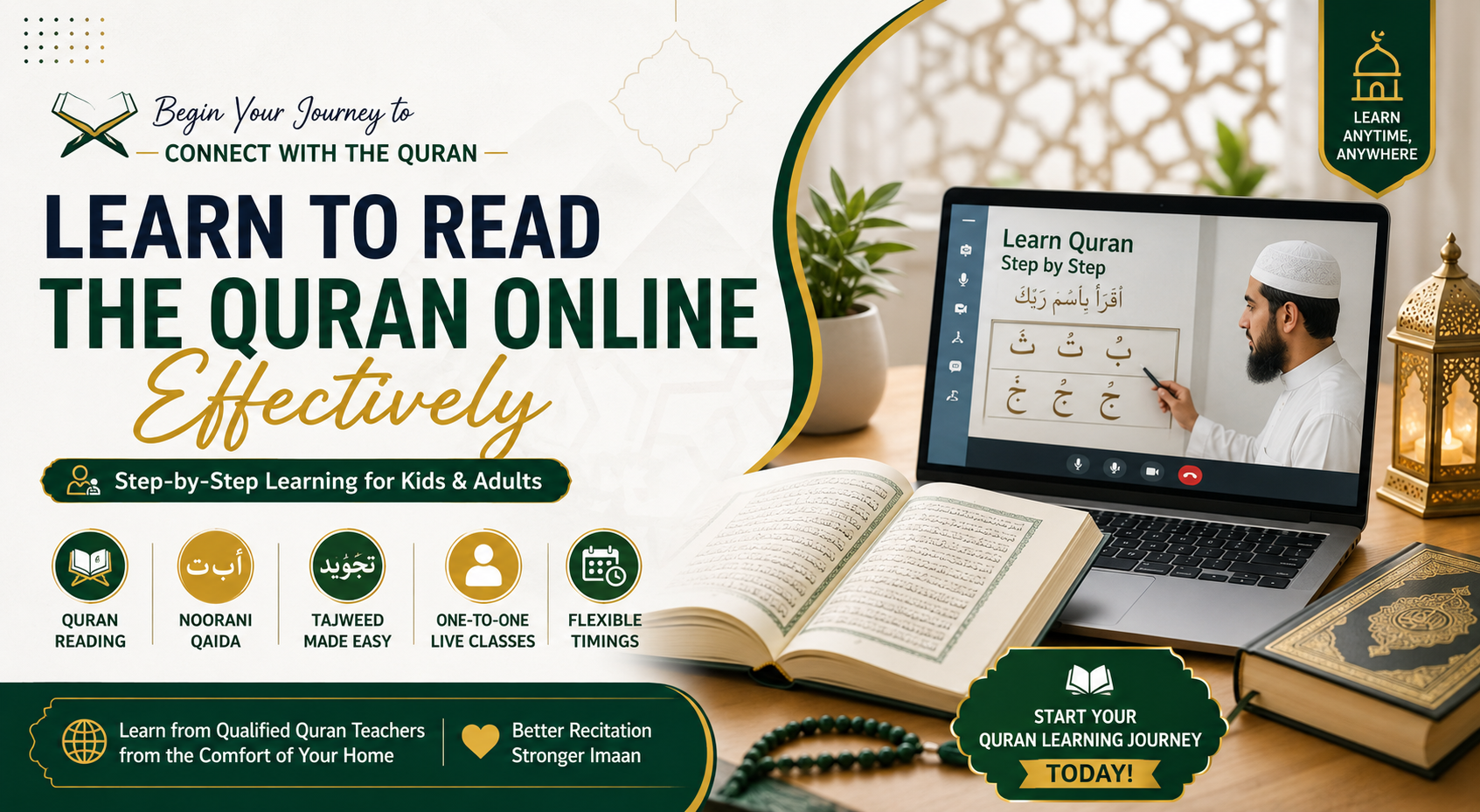
The Quran, the Holy Book of Islam, holds a central place in the life of every Muslim. Whether you’re a new Muslim, a parent wanting to guide your child, or an adult who never had the chance to learn earlier, starting your Quran learning journey can feel overwhelming at first. The good news is that with the right approach, anyone can begin learning the Quran at any age. This guide breaks down exactly how beginners can start, step by step.
Step 1: Learn the Arabic Alphabet First
Before reading the Quran itself, beginners should learn the 28 letters of the Arabic alphabet, along with how each letter changes shape depending on its position in a word. This foundational step, often taught through a Noorani Qaida, makes the transition into Quran reading much smoother.
Step 2: Understand Basic Pronunciation Rules
Arabic contains sounds that don’t exist in many other languages, so beginners need guided practice to pronounce letters correctly. A qualified teacher can help you avoid common pronunciation mistakes early, which becomes much harder to correct later on.
Step 3: Start with Short Surahs
Once you know the alphabet and basic pronunciation, start reading short, commonly recited surahs such as Surah Al-Fatiha, Surah Al-Ikhlas, and Surah An-Nas. These shorter chapters build confidence quickly and are often already familiar from daily prayers.
Step 4: Learn Basic Tajweed Rules
Tajweed refers to the rules of correct Quran recitation. As a beginner, you don’t need to master every rule immediately — start with the basics, such as correct elongation (Madd) and clear pronunciation (Izhar), and build from there with practice.
Step 5: Practice Consistently, Even in Small Amounts
Consistency matters more than speed. Reading for just 10 to 15 minutes daily produces far better long-term results than occasional long sessions. Set a realistic daily goal and stick to it.
Step 6: Learn with a Qualified Teacher
Self-learning through apps or videos can help, but nothing replaces the guidance of a qualified teacher who can correct your mistakes in real time. A good teacher tailors lessons to your pace, whether you’re a child, a working adult, or a complete beginner.
Step 7: Understand the Meaning Alongside Recitation
While learning to recite the Quran correctly comes first, gradually adding translation and basic Tafsir (interpretation) helps deepen your connection to what you’re reading, making the learning experience more meaningful.
Common Mistakes Beginners Should Avoid
- Trying to learn Tajweed rules all at once instead of gradually.
- Skipping the Arabic alphabet stage and jumping straight into reading.
- Learning without any teacher supervision, which allows mistakes to go uncorrected.
- Setting unrealistic goals that lead to burnout and inconsistency.
Start Your Quran Learning Journey with Expert Guidance
Learning the Quran becomes much easier with a structured plan and the right teacher by your side. Our online Quran classes offer certified male and female teachers, lessons tailored for complete beginners, flexible timing for students worldwide, and a free trial class to help you get started with confidence.
Book your free trial class today and take the first step toward learning the Holy Book of Islam.