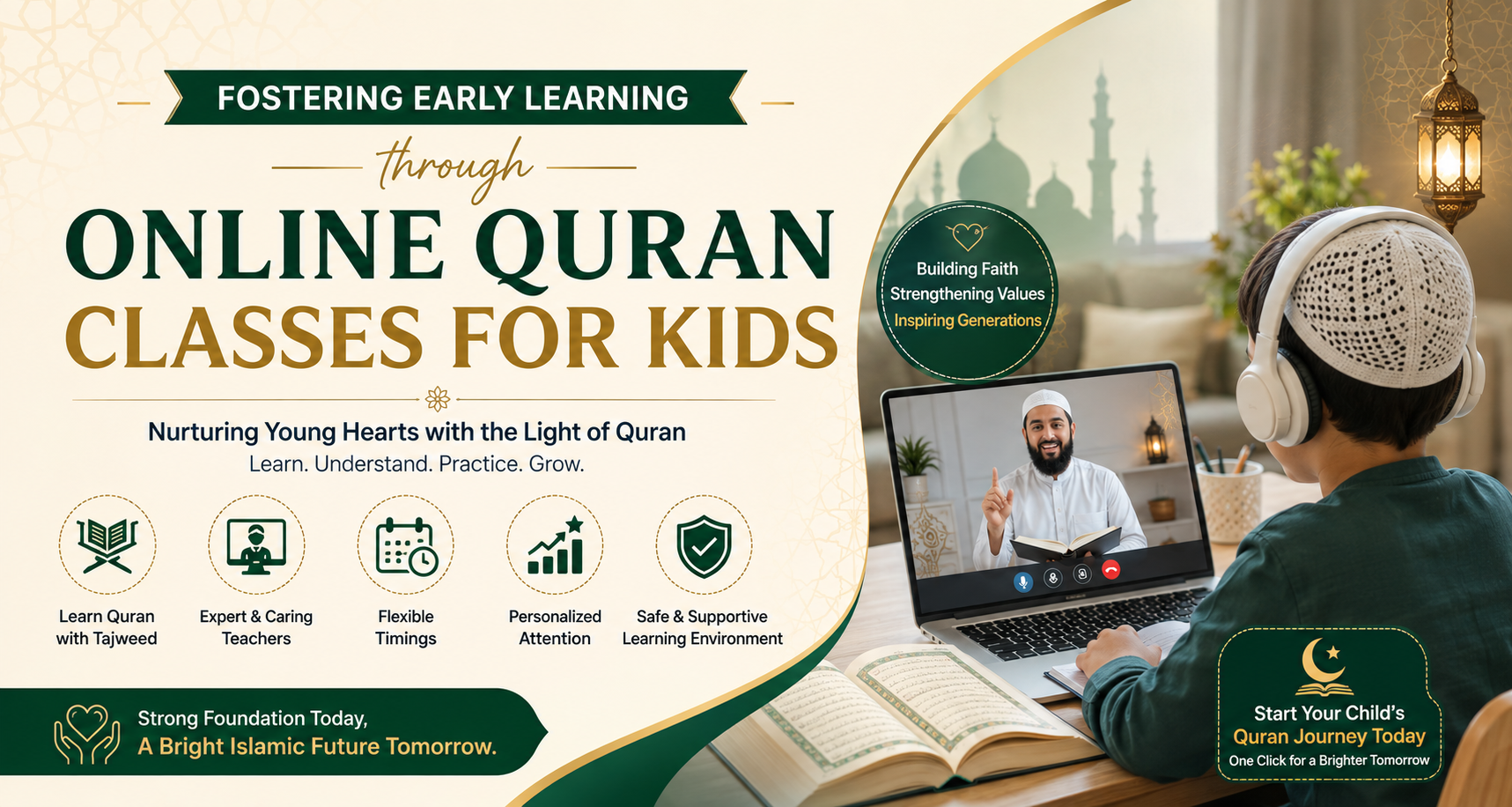



Quran Classes for Kids & Adults: Learn the Quran Online from Home
Finding the right Quran Classes for Kids & Adults can make Quran learning easier, more consistent, and more meaningful for the whole family. Today, parents can choose online Quran lessons for children, while adults can learn Quran reading, Tajweed, memorization, and Islamic studies from the comfort of home.
Online Quran education is especially useful for families with busy schedules. Instead of traveling to a local madrasa or waiting for a fixed classroom schedule, students can learn through personalized online lessons with a Quran teacher. Children can build strong Quran-reading foundations, while adults who are beginners can start learning step by step without feeling uncomfortable about their level.
At Qtstutor, the goal is to make Quran learning accessible for both children and adults through structured online lessons. Whether you want your child to learn Noorani or Madani Qaida, improve Quran reading, study Tajweed, memorize Surahs, or begin your own Quran journey, choosing the right learning approach is important.
This guide explains what to look for in Quran Classes for Kids & Adults, what students can learn, how online Quran classes work, how to choose a teacher, and how both children and adults can make steady progress.
What Are Quran Classes for Kids & Adults?
Quran Classes for Kids & Adults are structured Quran lessons designed to meet the different learning needs of children and grown-up students.
Children often need an encouraging and interactive teaching approach. They may begin with Arabic letters, Qaida, pronunciation, basic Quran reading, and Tajweed before progressing toward fluent recitation or memorization.
Adults may have different goals. Some adults want to learn the Quran from the beginning, while others already read Quran but want to improve pronunciation and Tajweed. Some want to memorize selected Surahs, understand Quranic Arabic, or establish a regular learning routine.
A good online Quran program should therefore offer flexibility in:
- Course level
- Lesson frequency
- Learning pace
- Age
- Previous Quran knowledge
- Learning goals
- Class timing
The most important point is that Quran learning should be approached consistently and respectfully, with teaching suited to the student’s individual needs.
Why Learn the Quran Online?
Online Quran classes have become a practical option for families and adults who want flexible Islamic education.
A student can attend a lesson from home using a computer, tablet, or smartphone. This can be particularly helpful for families living in countries where access to qualified Quran teachers may be limited.
Learn Quran from Home
One of the biggest advantages is convenience. Students do not need to spend time traveling to a physical classroom. Parents can arrange lessons around school, work, family responsibilities, and other activities.
Flexible Quran Classes
Adults often have changing work schedules, while children have school and extracurricular activities. Online lessons can make it easier to create a regular Quran-learning routine.
Personalized Attention
One-to-one Quran lessons allow a teacher to focus on an individual student’s reading, pronunciation, mistakes, and progress.
Suitable for Different Levels
Online Quran education can accommodate beginners as well as students who already know how to read. A teacher can assess the student’s current level and develop lessons accordingly.
Family-Friendly Learning
Parents can stay involved in their children’s learning and communicate with the teacher about progress, homework, revision, and areas that need improvement.
Quran Classes for Kids
Children can benefit from starting Quran education with a strong foundation. The objective should not simply be to finish a particular book or number of lessons. Children should gradually develop correct pronunciation, confidence, understanding, and a positive relationship with Quran learning.
Quran Reading for Children
Learning to read the Quran correctly begins with recognizing Arabic letters and understanding their sounds.
Young learners may first need to learn:
- Arabic letters
- Letter combinations
- Harakat
- Basic pronunciation
- Joining letters
- Simple words
- Quranic reading patterns
Once children develop these foundations, they can gradually progress toward reading Quranic verses more fluently.
A patient Quran teacher for kids can correct mistakes early and encourage children to keep practicing.
Noorani Qaida and Basic Quran Learning
Noorani Qaida is commonly used as a foundation for Quran reading. Some Quran academies also use Madani Qaida or other structured beginner materials.
A Qaida course can help students understand Arabic letters, sounds, basic rules, and reading patterns before they move into regular Quran recitation.
Parents should look for lessons that focus on understanding and correct pronunciation rather than rushing children through the material.
Tajweed for Kids
Tajweed teaches students how to pronounce Quranic letters and words correctly according to established recitation rules.
For children, Tajweed can be introduced gradually. Depending on their level, lessons may include:
- Makharij
- Basic Tajweed rules
- Noon Sakinah and Tanween
- Meem Sakinah
- Madd
- Qalqalah
- Rules of stopping and starting
- Correct pronunciation of Arabic letters
Children do not necessarily need to learn every advanced rule immediately. A progressive teaching method can make Tajweed easier to understand.
Quran Memorization for Kids
Some parents want their children to begin Hifz or memorize selected Surahs.
Successful memorization requires regular revision. A teacher can help a child divide a Surah into manageable portions and establish a revision routine.
Parents can support this process by encouraging daily practice without creating unnecessary pressure.
How Online Quran Classes Help Children
Online learning can provide children with focused attention from their teacher. Instead of sitting in a large classroom, a child may receive individual correction during the lesson.
Parents can also help by:
- Providing a quiet learning environment.
- Ensuring the child attends lessons consistently.
- Helping with revision.
- Encouraging daily Quran practice.
- Communicating with the teacher about progress.
- Celebrating improvement rather than focusing only on mistakes.
The purpose should be to help children develop a lifelong connection with the Quran.
Quran Classes for Adults
It is never too late to improve Quran reading or begin learning from the basics.
Many adults postpone Quran education because they believe they should already know how to read. Others have busy professional or family lives. Online adult Quran lessons can provide a private and flexible environment where learners can progress at their own pace.
Learn Quran Reading as an Adult
Adults who are beginners can start from the basics.
A beginner course may cover Arabic letters, pronunciation, Qaida, joining letters, harakat, and gradual Quran reading.
There is no need to feel embarrassed about starting at an elementary level. A good teacher understands that every student has a different background and learning pace.
Adult Quran Classes for Beginners
Adult learners may have different goals. Some want to learn basic Quran reading, while others want to correct pronunciation or improve fluency.
A personalized adult Quran course can address individual weaknesses instead of following exactly the same path for every student.
For example, an adult who already reads Quran may benefit more from Tajweed and pronunciation practice than from starting the alphabet again.
Learn Quran with Tajweed
Tajweed is important for students who want to improve the accuracy of their Quran recitation.
Adults can study Tajweed step by step, practicing each rule through actual Quranic examples.
Regular feedback is valuable because some pronunciation errors are difficult for students to recognize themselves.
Quran Memorization for Adults
Adults can also memorize the Quran. The pace may be different from that of children because adults often have work, family, and other responsibilities.
A practical Hifz plan can include:
- Small daily portions
- Frequent revision
- Weekly review
- Consistent recitation
- Teacher feedback
- Realistic memorization goals
Consistency is usually more sustainable than trying to memorize too much at once.
Flexible Quran Lessons for Busy Adults
One of the major benefits of online Quran classes is scheduling flexibility.
An adult student may prefer lessons before work, after work, or during another suitable time. The important thing is to establish a routine that can realistically be maintained.
What Do Students Learn in Quran Classes?
The exact curriculum should depend on the student’s age and goals, but online Quran education can include several areas.
Noorani or Madani Qaida
Beginner students can learn the foundations needed for Quran reading.
Quran Reading
Students develop fluency and improve their ability to read Quranic text correctly.
Tajweed
Students learn recitation rules and practice correct pronunciation.
Makharij
Makharij focuses on the articulation points of Arabic letters.
Quran Memorization and Hifz
Students can memorize selected Surahs or follow a structured Hifz program.
Daily Duas
Students may also learn commonly used daily duas appropriate to their level.
Islamic Studies
Age-appropriate Islamic education can help children understand basic Islamic beliefs, manners, worship, and everyday practices.
Quranic Arabic
For students interested in understanding the language of the Quran, Quranic Arabic can provide an introduction to important vocabulary, grammar, and meanings.
The curriculum should be adapted to the learner rather than forcing every student through exactly the same program.
Benefits of Online Quran Classes for Kids & Adults
The right online learning environment can offer several practical benefits.
1. Learn from Home
Students can attend lessons without traveling to a physical academy.
2. Flexible Scheduling
Lessons can be arranged around school, work, and family commitments.
3. One-to-One Attention
Private Quran lessons allow the teacher to focus directly on the student.
4. Personalized Learning
A student can progress according to their current ability and learning goals.
5. Convenient for Parents
Parents can arrange children’s lessons from home and remain aware of their learning progress.
6. Suitable Learning Pace
Beginners can take more time with difficult concepts, while advanced learners can move forward when ready.
7. Access to Quran Teachers
Online education can connect students with teachers regardless of where they live.
8. Consistent Learning
A scheduled online lesson can help students develop a regular Quran-learning habit.
How to Choose the Best Quran Classes for Kids & Adults
Choosing a Quran academy should involve more than looking at the cheapest price.
Consider the following factors before enrolling.
Qualified Quran Teachers
Ask about the teacher’s Quran education, Tajweed knowledge, teaching experience, and approach to students.
Experience Teaching Children
Teaching children requires patience and a different communication style from teaching adults.
Experience Teaching Adults
Adult learners may require a different pace and more flexible lesson structure.
Tajweed Expertise
If improving recitation is important to you, make sure the teacher has suitable Tajweed knowledge and can provide practical correction.
Trial Class or Assessment
A trial or assessment can help determine whether the teacher’s communication style and teaching approach are suitable.
Flexible Timings
Check whether available lesson times work with your family’s routine.
One-to-One Lessons
Private classes may provide more focused attention than group lessons.
Safety and Professionalism
Parents should choose an academy that maintains professional communication and an appropriate learning environment for children.
Progress Tracking
Ask how teachers assess improvement and communicate progress to parents.
Course Structure
Understand what the student will study and how lessons will progress.
Transparent Pricing
Make sure you understand the lesson frequency, duration, and other factors affecting the cost before enrolling.
Kids vs Adults: Which Quran Course Is Right for You?
| Area | Quran Classes for Kids | Quran Classes for Adults |
|---|---|---|
| Main Goal | Build a strong Quran foundation | Improve or begin Quran learning |
| Teaching Style | Encouraging and child-friendly | Patient and individualized |
| Learning Pace | Structured around age and ability | Adapted to personal schedule |
| Common Courses | Qaida, Quran Reading, Tajweed, Hifz | Qaida, Reading, Tajweed, Hifz |
| Schedule | Around school and family routines | Around work and personal commitments |
| Parent Involvement | Often helpful | Usually self-managed |
| Revision | Frequent short practice | Flexible daily or weekly practice |
The right course depends on the student’s current level and objective. A beginner child and a beginner adult may both need Qaida, but the teaching approach can be quite different.
How Do Online Quran Classes Work?
Starting online Quran lessons is usually straightforward.
Step 1: Contact the Academy
Share information about the student’s age, current Quran level, preferred course, and available schedule.
Step 2: Choose a Suitable Course
The academy can recommend a suitable program based on the student’s needs.
Step 3: Schedule a Trial or Assessment
A trial lesson or assessment can help determine the student’s level and introduce the teaching method.
Step 4: Meet the Quran Teacher Online
The student attends the lesson using an appropriate online communication platform.
Step 5: Begin Personalized Lessons
The teacher works through the selected curriculum and corrects mistakes during the lesson.
Step 6: Receive Regular Feedback
Students and parents can receive guidance about areas requiring additional practice.
Step 7: Track Progress
Regular lessons, revision, and assessment can help students move toward their learning goals.
Are Online Quran Classes Effective?
Online Quran classes can be effective when the student has a suitable teacher, reliable lessons, regular attendance, and sufficient practice between classes.
The technology itself does not guarantee successful learning. The quality of teaching and consistency of the student are much more important.
For children, parental support can also make a significant difference. For adults, creating a realistic routine can help prevent long gaps between lessons.
The best online Quran program is one that matches the student’s level, schedule, goals, and learning style.
How Often Should You Take Quran Lessons?
There is no single schedule that works for everyone.
A student may choose lessons several times a week depending on their goals, availability, and course.
For children, regular shorter sessions may be easier to maintain than occasional long sessions. Adults may choose a schedule that fits around their work and family responsibilities.
Whatever schedule you choose, consistency matters. Regular practice between lessons is also important for Quran reading, Tajweed, and memorization.
What Age Can Children Start Quran Classes?
Children can begin Quran education when they are developmentally ready to participate in lessons and learn basic concepts.
The exact age varies from child to child. Some children can begin recognizing Arabic letters at a young age, while others may benefit from starting later.
Rather than focusing only on age, parents should consider the child’s attention span, communication ability, interest, and readiness to participate.
A good teacher can adapt the lesson length and activities to the child’s level.
Why Choose Qtstutor for Quran Classes?
Qtstutor provides online Quran learning options for children and adults who want to study from home.
The available learning areas can include:
- Quran classes for kids and adults
- Quran reading
- Tajweed
- Hifz and Quran memorization
- Noorani/Madani Qaida
- Personalized online Quran lessons
- Flexible lesson scheduling
- Individual attention from Quran teachers
The aim is to provide a structured learning experience while allowing students to progress according to their level and goals.
Parents looking for Quran education for children can discuss the child’s current reading ability and learning objectives. Adult learners can explain whether they are complete beginners, already able to read Quran, or interested in improving Tajweed and fluency.
For more information about available programs, visit Qtstutor.
How Much Do Online Quran Classes Cost?
The cost of online Quran lessons can vary depending on several factors.
These may include:
- Number of lessons per week
- Duration of each lesson
- Type of Quran course
- One-to-one or group classes
- Teacher experience
- Student’s learning level
- Course requirements
Instead of choosing a Quran academy based only on price, consider the overall value of the program, teaching quality, lesson structure, flexibility, and student support.
For current course options and pricing, contact Qtstutor directly rather than relying on outdated information from third-party websites.
Tips for Successful Quran Learning at Home
Online learning works best when students create a suitable environment and maintain consistency.
Tips for Children
Create a regular schedule: Try to keep Quran lessons at a consistent time.
Provide a quiet space: Reduce distractions during the lesson.
Encourage revision: A few minutes of regular practice can reinforce what the child learned.
Stay positive: Children generally respond better to encouragement than excessive pressure.
Communicate with the teacher: Ask about areas where the child needs additional support.
Celebrate progress: Recognizing improvement can help children remain motivated.
Tips for Adults
Set realistic goals: Decide whether your immediate goal is reading, Tajweed, memorization, or another area.
Practice regularly: Even a short daily practice session can support progress.
Attend lessons consistently: Avoid unnecessary gaps between classes.
Revise previous lessons: Revision helps reinforce new concepts.
Practice Tajweed: Apply the rules while reading rather than studying them only theoretically.
Ask questions: Do not hesitate to ask the teacher when something is unclear.
Common Mistakes to Avoid When Choosing Quran Classes
Some families focus entirely on price or convenience and overlook teaching quality.
Avoid choosing a program without understanding:
- Who will teach the student?
- What will the student learn?
- How frequently are lessons held?
- Is the teacher experienced with the student’s age group?
- How are mistakes corrected?
- How is progress monitored?
- Is the schedule realistic?
- Are course costs clearly explained?
Parents should also avoid putting unrealistic expectations on children. Quran education should be consistent and disciplined, but children also need encouragement and a positive learning environment.
Adults should similarly avoid comparing their progress with someone else’s. Every learner starts from a different level.
Building a Long-Term Quran Learning Routine
Quran education is not only about completing a course. The ultimate goal is to develop a lasting relationship with Quran reading, recitation, understanding, and practice.
A long-term routine might include:
- Attending scheduled Quran lessons.
- Reviewing previous material.
- Practicing reading regularly.
- Applying Tajweed rules.
- Memorizing manageable portions when appropriate.
- Learning the meanings of selected verses.
- Maintaining consistency over time.
Parents can help children develop this habit by making Quran learning a normal and valued part of family life.
Adults can create a similar routine by setting aside a specific time for Quran study and protecting that time from unnecessary distractions.
Final Thoughts on Quran Classes for Kids & Adults
Finding the right Quran Classes for Kids & Adults is an important decision for families and individual learners. Children need patient, age-appropriate instruction, while adults may need flexible lessons that accommodate work and family responsibilities.
Whether the goal is Quran reading, Noorani or Madani Qaida, Tajweed, Hifz, Quran memorization, or Quranic Arabic, the right teacher and consistent practice can make the learning journey more structured and rewarding.
Online Quran classes allow students to learn from home while receiving personalized instruction. However, successful learning depends on more than technology. A suitable teacher, clear goals, regular attendance, revision, and a supportive learning environment all matter.
If you or your child is ready to begin or improve Quran learning, explore the programs available through Qtstutor and choose a course that matches your current level and goals.
Start your Quran learning journey from home with Qtstutor.
Frequently Asked Questions
1. What are Quran Classes for Kids & Adults?
Quran Classes for Kids & Adults are structured lessons designed to teach Quran reading, pronunciation, Tajweed, memorization, and related Islamic subjects to learners of different ages. Children’s lessons can use age-appropriate teaching methods, while adult courses can be adapted to the learner’s previous knowledge, schedule, and personal goals.
2. Can children learn Quran online?
Yes. Children can learn Quran online through live lessons with a Quran teacher. Online classes can cover Qaida, Quran reading, Tajweed, memorization, and basic Islamic education. Parents should provide a quiet learning environment and maintain regular communication with the teacher about the child’s progress.
3. Can adults learn Quran from the beginning?
Yes. Adults can start Quran learning from the beginning regardless of their previous experience. A beginner may start with Arabic letters and Qaida before progressing to Quran reading. A suitable teacher can adjust the pace according to the student’s ability and learning goals.
4. Can I learn Quran with Tajweed online?
Yes. Tajweed can be taught through online Quran lessons. A teacher can explain recitation rules, demonstrate pronunciation, and listen to the student’s recitation to identify mistakes. Regular practice is important because Tajweed requires practical application in addition to theoretical learning.
5. Are online Quran classes effective?
Online Quran classes can be effective when students receive quality instruction, attend consistently, practice between lessons, and have an appropriate learning environment. One-to-one lessons can provide focused attention and allow teachers to correct individual pronunciation and recitation mistakes.
6. What is taught in online Quran classes?
Online Quran courses may include Noorani or Madani Qaida, Quran reading, Tajweed, Makharij, Hifz, selected Surah memorization, daily duas, Islamic studies, and Quranic Arabic. The exact curriculum should depend on the student’s age, current level, and learning objectives.
7. How often should children take Quran lessons?
The ideal frequency depends on the child’s age, attention span, current level, and learning goals. Regular lessons combined with short revision sessions at home can help children develop consistency. Parents should choose a schedule the child can maintain without unnecessary pressure.
8. Can busy adults take online Quran lessons?
Yes. Online Quran lessons can be particularly convenient for adults with work or family commitments. Students can choose lesson times that fit their routine, subject to the academy’s available schedule. Consistency is more important than choosing an unrealistic timetable.
9. What should I look for in an online Quran teacher?
Look for a teacher with appropriate Quran and Tajweed knowledge, teaching experience, patience, clear communication, and an approach suitable for the student’s age and level. Parents should also consider professionalism, lesson structure, progress feedback, and whether the teacher understands the child’s learning needs.
10. Are Quran classes suitable for complete beginners?
Yes. Quran classes can be designed for complete beginners. Students can start with Arabic letters and basic Qaida before progressing to Quran reading. A good beginner course should focus on correct foundations instead of rushing students into advanced material.
11. Can children memorize the Quran online?
Yes. Children can participate in online Hifz or Quran memorization programs when they have a suitable teacher, regular lessons, and a consistent revision routine. Memorization should be approached gradually, with adequate review of previously memorized portions.
12. Can adults join Hifz classes?
Yes. Adults can study Quran memorization online. Because adults often have professional and family responsibilities, their memorization schedule may need to be more flexible. Smaller portions combined with regular revision can provide a manageable approach.
13. How do online Quran classes work?
Students normally contact the academy, select a suitable course, discuss their level and schedule, and attend a trial or assessment when available. After that, regular online lessons begin. The teacher teaches the selected curriculum, corrects mistakes, assigns practice, and monitors progress.
14. How much do online Quran classes cost?
Prices vary depending on lesson frequency, class duration, course type, teacher, and whether lessons are private or group-based. Students should ask the academy for current pricing and understand exactly what is included before enrolling.
15. Can I start Quran classes from home?
Yes. Online Quran education allows students to study from home using an internet-connected device and an appropriate online learning setup. A quiet room, reliable internet connection, Quran or learning materials, and regular lesson schedule can make home learning more effective.