


Fostering Early Learning Through Online Quran Classes
Early childhood is one of the most important stages of a child’s development. During these early years, children naturally absorb new information, develop habits, and build the foundations that can influence their future learning. Introducing the Quran at an early age can help children develop a meaningful connection with their faith while also improving important learning skills.
For parents living in different parts of the world, finding a suitable Quran teacher, Islamic school, or local madrasa can sometimes be difficult. Busy family schedules, school commitments, distance, and limited availability of qualified teachers can make regular Quran learning challenging.
This is where online Quran classes for kids can provide a practical solution.
With a suitable online Quran program, children can learn Quran reading, Tajweed, memorization, and basic Islamic teachings from home while following a schedule that fits their family routine.
Why Is Early Quran Learning Important?
Children are often more receptive to learning during their early years. When Quran education is introduced gradually and positively, children can become familiar with Arabic letters, pronunciation, Quranic vocabulary, and Islamic manners from a young age.
Early Quran learning can help children:
- Develop a relationship with the Quran
- Learn correct Quran pronunciation
- Build good learning habits
- Improve concentration and listening skills
- Understand basic Islamic values
- Develop confidence in reading Arabic
- Establish a regular Quran routine
- Become familiar with Islamic manners and teachings
The goal should not be to make Quran learning stressful. Instead, parents can create a positive environment where children see Quran lessons as an important and enjoyable part of their daily routine.
How Online Quran Classes Support Early Learning
Online Quran education has become increasingly convenient for families around the world. Children can attend lessons from their home using a computer, tablet, or other suitable device.
A well-organized online Quran class can combine traditional Quran teaching methods with modern technology.
1. Learning From Home
One of the biggest advantages of online Quran classes is convenience.
Children do not have to travel to a madrasa or tutoring center. They can attend their lesson from a familiar environment at home.
This can be especially useful for parents who have busy schedules or live far away from Islamic learning centers.
2. Flexible Class Timings
Children already have school, homework, extracurricular activities, and family responsibilities.
Flexible online Quran lessons allow parents to choose a suitable time around the child’s daily routine.
For example, a child may attend Quran class:
- Before school
- After school
- In the evening
- During weekends
- During school holidays
A consistent schedule can help children develop a long-term Quran learning habit.
3. One-to-One Attention
One-to-one online Quran classes can give children direct interaction with their teacher.
Instead of competing for the teacher’s attention in a large classroom, the child can receive personalized guidance.
The teacher can identify areas where the child needs improvement and adjust the lesson accordingly.
4. Learning Quran With Tajweed
Correct pronunciation is an important part of Quran reading.
Online Quran classes can provide children with structured Tajweed lessons that focus on pronunciation, articulation points, elongations, stopping rules, and other important aspects of Quran recitation.
A qualified teacher can listen carefully to the child’s recitation and correct mistakes during the lesson.
5. Personalized Learning
Every child learns differently.
Some children learn quickly, while others need additional practice and repetition. A personalized online Quran program can be adjusted according to the child’s age, ability, and current Quran reading level.
For beginners, lessons may start with:
- Arabic alphabet
- Basic letter recognition
- Harakat
- Joining letters
- Madani Qaida
- Short Surahs
- Basic Quran reading
As the child progresses, the lessons can gradually introduce more advanced Quran reading and Tajweed.
Online Quran Learning Can Make Education More Engaging
Children today are comfortable using digital devices for education, communication, and entertainment. Online Quran learning can use this familiarity with technology in a productive way.
A teacher can use screen sharing, digital Quran resources, visual examples, repetition, and interactive exercises to make lessons easier for children to understand.
However, technology itself is not the most important factor. The quality of the teacher and the teaching approach remain essential.
A good Quran teacher should be patient, encouraging, knowledgeable, and able to communicate with children appropriately.
Building Good Habits Through Quran Education
Early Quran education is not only about learning how to read Arabic words.
It can also help parents introduce Islamic values and habits into their children’s daily lives.
Children can gradually learn the importance of:
- Respecting parents
- Speaking kindly
- Helping others
- Being honest
- Showing gratitude
- Keeping promises
- Making Dua
- Respecting the Quran
- Practicing good manners
When Quran education is connected with everyday life, children can begin to understand that the Quran is not simply a book to read but a source of guidance.
Online Quran Classes for Busy Families
Modern family life can be busy. Parents may have demanding jobs, children may attend full-time school, and families may live far from Islamic centers.
This can make traditional fixed-location Quran classes difficult to manage.
Online Quran classes provide greater flexibility because parents can arrange lessons according to their family’s schedule.
This can be particularly helpful for Muslim families living in countries where access to local Quran teachers may be limited.
Whether a family lives in the United States, United Kingdom, Canada, Australia, Europe, the Middle East, or another part of the world, online Quran education can make learning more accessible.
How Parents Can Help Children Succeed in Online Quran Classes
Parents have an important role in their child’s Quran learning journey.
Here are some practical ways parents can support their children.
Create a Quiet Learning Space
Choose a comfortable and quiet area where the child can attend the Quran lesson without unnecessary distractions.
Maintain a Consistent Schedule
Try to keep Quran lessons at approximately the same time each day or week. Consistency helps children develop a routine.
Encourage Rather Than Pressure
Children respond better to encouragement than excessive pressure.
Praise their progress and encourage them when they make mistakes.
Practice Between Classes
A few minutes of Quran practice outside the lesson can make a significant difference.
Parents can encourage children to revise the verses, letters, or Tajweed rules taught during the class.
Communicate With the Teacher
Regular communication between parents and teachers can help identify the child’s strengths and areas that require additional practice.
Choosing the Right Online Quran Teacher for Your Child
Choosing a qualified and child-friendly Quran teacher is one of the most important decisions parents make.
Before enrolling a child, parents should consider:
Quran Knowledge
The teacher should have strong Quran reading and Tajweed skills.
Experience With Children
Teaching children requires patience and a different approach from teaching adults.
Communication Skills
A teacher should be able to explain concepts clearly and communicate respectfully with both children and parents.
Trial Class
A trial class can help parents understand the teacher’s teaching style and determine whether the child feels comfortable.
Flexible Scheduling
Look for an online Quran academy that can accommodate your family’s time zone and schedule.
Progress Tracking
Regular feedback can help parents understand how their child is progressing.
Online Quran Classes for Different Age Groups
Online Quran learning can be adapted to different stages of childhood.
Quran Classes for Young Beginners
Young children may begin with Arabic letters, basic sounds, and Qaida lessons.
The focus should be on building familiarity and confidence.
Quran Classes for School-Age Children
Children who already know the basics can move toward Quran reading, Tajweed, memorization, and Islamic studies.
Quran Memorization for Children
Children interested in Hifz can follow a structured memorization program with regular revision.
Consistent revision is particularly important because memorization requires ongoing practice.
The Role of Tajweed in Early Quran Education
Tajweed helps children learn how to pronounce Quranic letters and words correctly.
Teaching Tajweed from an early stage can prevent incorrect pronunciation habits from becoming deeply established.
Children do not necessarily need to learn every advanced Tajweed rule immediately. A qualified teacher can introduce rules gradually according to the child’s age and ability.
This makes the learning process more manageable and enjoyable.
Can Online Quran Classes Be Effective for Children?
Yes, online Quran classes can be effective when the program is properly structured and the child receives appropriate guidance.
The effectiveness of online learning depends on several factors, including:
- Teacher quality
- Lesson structure
- Child’s age
- Internet connection
- Parent involvement
- Consistency
- Learning environment
- Regular practice
Online learning should not simply mean placing a child in front of a screen. The teacher should actively engage with the student, listen to their recitation, correct mistakes, and provide appropriate feedback.
Why Choose Online Quran Classes?
For many families, online Quran learning offers a combination of accessibility, convenience, and personalized education.
Parents can potentially benefit from:
Convenience: Lessons take place from home.
Flexibility: Families can select suitable class times.
Personalized attention: One-to-one lessons allow the teacher to focus on the individual child.
Accessibility: Families can connect with qualified teachers regardless of their local area.
Progress-based learning: Lessons can be adjusted according to the child’s ability.
Family involvement: Parents can easily observe and support the learning process.
Creating a Positive Quran Learning Environment
A child’s attitude toward Quran learning can be influenced by the environment created around them.
Parents can make Quran learning a positive experience by:
- Keeping lessons consistent
- Celebrating small achievements
- Avoiding unnecessary pressure
- Encouraging daily Quran reading
- Listening to Quran together as a family
- Teaching children the importance of good manners
- Connecting Quranic teachings with everyday situations
When children associate the Quran with love, guidance, encouragement, and family support, they may develop a stronger long-term connection with Quranic learning.
Frequently Asked Questions
What is the best age to start online Quran classes?
There is no single perfect age for every child. Many children can begin basic Quran learning when they are ready to recognize letters, listen to instructions, and participate in a short lesson. A teacher can recommend an appropriate starting level based on the child’s abilities.
Are online Quran classes suitable for young children?
Yes. Online Quran classes can be suitable for young children when lessons are age-appropriate, interactive, and taught by a patient teacher experienced in working with children.
Can children learn Tajweed online?
Yes. Children can learn Tajweed online through live lessons. The teacher can listen to their recitation, identify pronunciation mistakes, and provide corrections.
Can my child learn Quran from home?
Yes. Online Quran classes allow children to learn from home using an internet-connected device and a suitable learning environment.
How long should a child’s Quran lesson be?
The ideal lesson length depends on the child’s age, concentration level, and learning goals. Younger children may benefit from shorter lessons, while older students may be comfortable with longer sessions.
What should parents look for in an online Quran academy?
Parents should consider teacher qualifications, experience with children, Tajweed expertise, flexible schedules, trial classes, lesson structure, communication, and progress updates.
Can children learn Hifz online?
Yes. Many children study Quran memorization through online one-to-one lessons. A structured Hifz plan should include new memorization as well as regular revision.
Is online Quran learning available internationally?
Yes. Online Quran education can be accessed by families in many countries, making it a convenient option for Muslims who may not have suitable Quran teachers or Islamic centers nearby.
Start Your Child’s Quran Learning Journey
Fostering early learning through the Quran can give children a strong foundation for their religious education. With patience, consistency, qualified teaching, and parental support, children can gradually develop Quran reading skills, improve their Tajweed, memorize Surahs, and learn Islamic values.
For families looking for a convenient way to introduce Quran education at home, online Quran classes for kids can be an effective and flexible option.
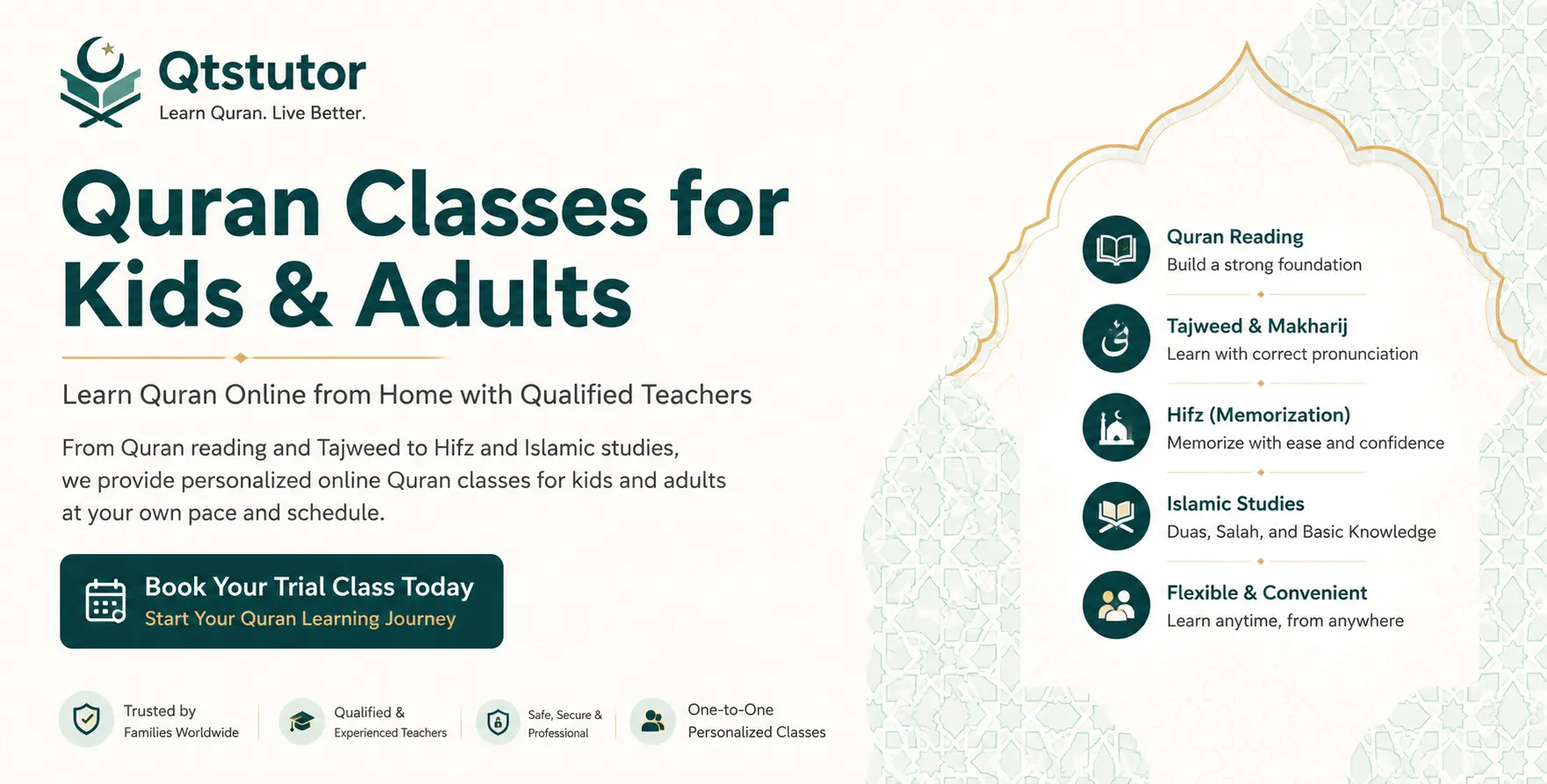
At Qtstutor Online Quran Academy, children can learn Quran online through structured lessons designed around their age and learning level. Parents can explore options such as Quran reading, Madani Qaida, Tajweed, Hifz, and Islamic learning.
Give your child the opportunity to learn the Quran in a supportive environment and build a lifelong connection with the Book of Allah.
Start learning the Quran online today and make Quran education a meaningful part of your child’s daily life.